Friday, August 31, 2012

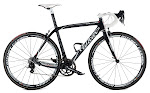
Cento1SR

2013 Cento1SR in Matte Black
Evolution is nothing without an origin.
When we developed the Zero.7, we sought to perfect power transfer, maximizing every watt of a rider’s effort.
In designing our time trial bikes, we learned how to control the flow of air.
Our experience with the Cento1 confirmed that the integrated seatmast is vital for those who demand the best performance from their bike.
We combined these elements from our origins, and then the insight and experience of Wilier Triestina did the rest.
Cento1SR.
The evolution begins today.

INTEGRATED FORK + VIRTUAL HEAD TUBE
The handling of a Wilier bike is one of its most treasured attributes. We continually search for ways to further improve the solid feel at the front end, which has led to some of the most significant of the Cento1 SR’s enhancements.
We found that a new way of positioning the down tube and top tube with respect to the head tube creates a virtual increase of the head tube’s height, which makes it 14% stiffer in terms of torsional rigidity.
The top tube approaches the head tube at a downward angle while the down tube is angled upwards as it joins the head tube and the Integrated Fork. This junction is traditionally like the point of a triangle, but this new angle and positioning makes it more like a square, which is stiffer. The back of the fork’s brake hole is tucked into the down tube, keeping it clean and protected from the elements. The Integrated Fork design also creates an aerodynamic profile that reduces drag.

Drawing from research implemented in development of our Twin Blade, the Cento1 SR’s fork legs are designed for optimal stability and aerodynamics. Like the proven Kamm truncated tail concept implemented in our time trial models, both the Cento1 SR’s integrated seatmast and fork legs benefit from this structural innovation, thereby attaining a perfect balance of lightweight, aerodynamics and steerability.

INTEGRATED ADJUSTER PLATE (IAP)
Further evolution has been realized through the implementation of our Integrated Adjuster Plate (IAP) cable routing feature, enhancing aerodynamics as well as performance of both electronic and mechanical groups.
The IAP is integrated seamlessly into the Cento1 SR’s down tube to receive cable stops for mechanical groups or wire kits for Shimano Di2 and Campagnolo EPS electronic systems.
Interchangeable based upon a rider’s chosen group, the IAP feature simplifies internal routing of cables, as well as creating a more functionally optimized as well as aesthetic solution.
In combination with a complementary and likewise integrated cable guide at the bottom bracket, IAP ensures unobstructed, noise-free and friction-free cable routing and shifting.
Furthermore, our cable stop option for mechanical groups features integrated barrel adjusters for easy access while riding, as well as additionally enhanced aerodynamics.

3D INTEGRATED CABLE ROUTING PLATE (3D ICRP)
Cable routing directed internally within the frame has been an important part of our research and development efforts.
Smooth and reliable operation of the drivetrain and braking systems is an imperative part of determining optimal cable routing; in fact, it is the number one priority.
This led us to develop a feature exclusive to the Cento1 SR: 3D Integrated Cable Routing Plate (3D ICRP). It is a cable guide tucked flushly in the frame beneath the bottom bracket that is designed with varied routing for each of the two cables.
Unlike conventional cable guides, the Cento1 SR’s 3D ICRP is designed to promote differentiated and specific routing for optimal functionality of each of the derailleurs.
The resulting profiling of the 3D ICRP integrated cable guide ensures both a sure feel at the front derailleur as well as rear derailleur performance.
An essential aspect of optimal internal routing is the cable’s frictionless and contact-free movement within each of the frame tubes through which it passes.
Additionally, preserving the optimal arc of rear derailleur cable and housing between the point of exit from the frame at the drive-side chainstay into the rear derailleur itself ensures smooth and “crisp” shifting across the entire cogset.
As with the complementary IAP component, the frame is sculpted at the bottom bracket to receive seamlessly the 3D ICRP cable guide for Shimano Di2, Campagnolo EPS or mechanical systems.
Its minimalist and integrated characteristics assimilate the guide within the frame’s profiling to further enhance aerodynamics over conventional cable guide designs.

INTEGRATED SEATMAST
We believe that a bicycle worthy of the world’s best professional riders must represent the pinnacle of performance in every aspect. Since introducing our first integrated seatmast design as a feature of our original Cento1 model, we have never strayed from our conviction that it plays a key role in the ideal balance between structural performance, lightweight and comfort.
The Cento1 SR integrated seatmast takes the concept a step further with its Kamm truncated tail design for optimal aerodynamics.

ASSYMETRIC CHAINSTAYS
Another of the evolved SR features rooted in the original Cento1 design is our drive-side chainstay. Its shape and lower positioning counteract chain torque, while the non-drive-side chainstay is conversely designed to complement and work in conjunction with the drive-side stay.
The lowered drive-side stay also does away with “chain slap” typical of conventional designs, especially when traversing rough road surfaces.
At the same time, our minimalist and vertically compliant seatstays have been designed to complement the oversized chainstays by dampening vibrations while ensuring torsional and lateral stiffness for optimal power transfer.

SWINGARM
The Cento1 SR’s rear triangle conjoins continuous drive and non-drive-side monocoque stays to form an exceptionally stable and strong unified “swingarm” – another unique and renowned Wilier innovation – further elevating the bike’s responsiveness.

INTEGRATED DROPOUT
Lugless and seamless. No bolts, no external bonding. The SR’s rear dropouts are part and parcel of the integrated rear swingarm design. Even the points of contact, traditionally bonded aluminum sleeves or component parts, are part of the monocoque carbon mold, contributing to overall stability and weight savings.

3D DERAILLEUR HANGER
Our optional derailleur hangers no longer merely represent simple component parts to facilitate standardized installation of a rear derailleur.
Cento1 SR derailleur hangers have assumed a third dimension of functionality, facilitating different systems as well as serving as cable stops.
In addition to these rich new features, our 3D Derailleur Hangers are also much stiffer than conventional rear derailleur hangers.
Easily interchangeable, 3D Derailleur Hangers specifically facilitate either electronic or mechanical drivetrains. For mechanical groupsets, the hanger features a standard cable stop. For electronic groupsets, the specifically designed hanger features a simple opening through which passes the electronic wiring.
In the case of mechanical routing, the cable stop is positioned closer to the rear derailleur itself. This enables the implementation of a shorter length of housing from frame to derailleur while preserving optimal cable arc, maximizing rear derailleur smoothness and performance.
As with the Cento1 SR’s internal cable routing through the down tube, this cable stop at the back end of the drive-side chainstay keeps the rear derailleur shift cable well tensioned and centered within the stay for friction-free and noise-free movement.
The routing of electronic groupset wiring is also optimized, with the wiring’s point of exit positioned well above the drive-side dropout for quick and unencumbered wheel changes.

Friday, July 1, 2011

ZERO.7 LIGHTEST & MOST EFFICIENT WILIER FRAME TO DATE IMPLEMENTING BB386EVO

Wilier and FSA Collaboration Increases Lateral Frame Stiffness 30%

Wilier Triestina USA has officially announced new top model Zero.7 featuring BB386EVO, the new bottom bracket system Wilier designed in collaboration with component manufacturer Full Speed Ahead (FSA). The company will formally introduce the Zero.7 via video presentation, which will be available later today on the Wilier YouTube channel:
http://www.youtube.com/WilierChannel.


Wilier emphasized that innovation in the bicycle industry has been marked in recent years by fuller integration and improved standards. The company’s Cento1 and Cento1 Superleggera models, used by orldTour ProTeam Lampre-ISD, have featured a proprietary 93mm-wide oversize bottom bracket to enhance lateral stiffness while providing compatibility with the industry’s most popular cranksets.

For 2012, the company had once again sought a bottom bracket solution that would facilitate the most prominent crank systems, while also enabling integration of an oversize spindle. Wilier built on its original concept through its development efforts with component manufacturer FSA, resulting in new bottom bracket standard BB386EVO.

“The most significant benefits that BB386EVO have enabled in the design of the Zero.7 are a 30% increase in lateral stiffness while enabling a drastic reduction in weight,” explained founder and president of Wilier Triestina USA, Angelo Cilli. “This is our lightest frame ever. The result is optimal pedaling efficiency and power transfer with “zero” wasted energy – hence the name,” he concluded.

The Zero.7 bottom bracket shell is 86.5mm wide and boasts a diameter of 46mm. The FSA BB386EVO crankset utilizes a 30mm-diameter alloy spindle which is longer to satisfy the wider oversized bottom bracket shell. Press-fit polymer bearings are utilized for precision installation of the crankset to ensure exact tolerances.

Utilization of the FSA BB386EVO crankset will yield maximum stiffness and function in conjunction with the new Zero.7 bottom bracket design. However, as with the Wilier BB93 (aka BB94) bottom bracket system implemented for the Imperiale, Cento1 and Cento1 Superleggera models, all prominent cranksets will be compatible with the Zero.7 bottom bracket via adapters.

The FSA BB386 crankset can also be used with a traditional 68mm-wide bottom bracket and threaded cups.

“Results yielded in testing surprised even us,” explains Michele Gastaldello, head of research and development: “In the laboratory, stiffness in the Zero.7 bottom bracket area proved at least 30% superior to all of the standard BB30 systems we analyzed. The frame itself weighs less than 800 grams, so we are proud to announce the creation of a bike that will absolutely empower riders to conquer whatever challenges come their way.”

The Zero.7 utilizes the same 60 Ton carbon composition, ZnO nano resin technology and LIT bladder molding process as the Cento1 Superleggera for maximum material compaction and integrity.

Taking composites construction a step further, Wilier has implemented Special Elastic Infiltrated (SEI) film technology, featuring a proprietary viscoelastic film between the foundational and unidirectional
external layers of carbon fiber. SEI enhances the vibration dampening properties of the frame’s material composition, resulting in improved comfort even with the reduction in overall weight. SEI also increases the frame’s impact resistance by 35%, interlaminar shear strength (integrity of the bonded layers) by 18% and flexural strength by 12%.


Additional features include tapered head tube and carbon monocoque steerer tube (1 1/8” to 1 1/4”) as well as Wilier’s trademark asymmetric rear stays. The Zero.7 will be available in a unique matte black
carbon with red highlights. New Zero.7-specific geometry comes in six sizes, XS-S-M-L-XL-XXL. Weight: 795 grams, size M.

FSA Clarifies Wilier's Role in Development of New Standard BB386EVO

Full Speed Ahead clarifies the catalysts for development of new bottom bracket standard, BB386EVO.

New Wilier Triestina superbike, the Zero.7, which utilizes a customized FSA BB386EVO crankset, will be officially launched on July 1st. For more information visit www.wilier-usa.com.

Tuesday, June 21, 2011

Cunego's Impressive 2nd Place & Graciousness at Tour of Switzerland

Posted to Road Bike Action's Fb page:

"Gracious in defeat, Damiano Cunego: 'I'm really sorry I lost but that's sport, you have to learn to lose before you can enjoy victory. Thinking back on my performance, I think it's a miracle I finished second.'"

You're first class, Damiano -- bravo!

Monday, May 30, 2011

Giro podium, stage wins for Wilier & Lampre-ISD

Michele Scarponi takes a hard-fought 2nd place behind cycling’s
strongest stage racer.

Petacchi demonstrates once again that he is one of the world's most powerful sprinters, taking another of his numerous Giro stage wins.

Young Diego Ulissi takes a dramatic stage 17 win in the three-up sprint between the remnants of the breakaway.

Monday, May 9, 2011

Wilier Triestina TwinFoil TT Bike 6th in Stage 1 at Giro d'Italia, Garners Media Attention

Giro TT Sees First Use of New Wilier TwinFoil TT Bike by
ZachOverholt - May 9, 2011


http://www.bikerumor.com/2011/05/09/giro-tt-sees/#more-31475

Excerpts:“What is different about the TwinFoil?

“Possibly the most visually striking element of the TwinFoil would be the way in which the rear stays attach to the seat tube… The idea behind the wide stays is that the spinning wheel causes turbulence so by moving the stays farther away, the turbulence can be avoided.
…

“Continuing down from the seat tube, the rear brake is decidedly aero, as like many TT bikes the brake is tucked up and under the chainstays just behind the crankset. The brake itself appears to be a new model from TRP, as it is basically a Mini-V whose arms when at rest add to the aero profile of the frame. From a mechanic’s perspective, the Mini-V Aero is a huge improvement over the current crop of chainstay mounted brakes, as it offers easy access to all adjustment bolts without removing any covers or plates, along with a standard V-Brake release for easy wheel changes.

“… it does offer a unique sort of hump on the top tube which stops just short of the steerer tube.

In order to ensure ease of adjustment and to guarantee the adjustments stay that way, the TwinFoil offers both an integrated seat post clamp, and a 4 bolt dropout adjustment. … the TwinFoil sports a 4 bolt sliding dropout system that looks more similar to a mountain bike than road. However, for anyone who has ever had the experience of an inline adjuster moving around on you, the additional security of the bolt on system will be welcomed.

…

“Overall, for Team Lampre ISD, the new Wilier TwinFoil was worth a 6th place finish in its first team trial, only 24 seconds down of the leader.

* * * * *

Giro first look: Wilier Triestina TwinFoil TT bike By Caley Fretz, Published May 8th 2011

http://velonews.competitor.com/2011/05/giro-ditalia/giro-first-look-wilier-triestina-twinfoil-tt-bike_171802

Excerpts:


“The bike is designed with a wide set fork and rear stays, with the goal of providing maximum clearance between the frame and wheels. Wilier says this minimizes air turbulence and drag caused by the frame’s interaction with spinning wheels.

“…the frame makes good use of TRP’s integrated aero brake, placing it on the chain stays under the bottom bracket to completely hide the rear brake from the wind. The slick integrated seat post binder, and smart brake cable routing through the top tube are a nice touch as well.

“Wilier also uses a sliding vertical dropout, adjustable using four mounting bolts. This allows for a consistent gap between tire and frame, regardless of tire size, as well as consistent positioning of the cassette in relation to the rear derailleur."

Friday, May 6, 2011

New Time Trial Machine for Lampre Isd

Wilier Triestina TwinFoil Aero Bike to Debut at 94th Giro d’Italia


ProTour Aerodynamics

Wilier Triestina announces the release of its new ProTour time trial bike, the TwinFoil, to be ridden by Team Lampre Isd at this year’s Giro d’Italia.


Innovative Solutions

The TwinFoil was created to overcome the three fundamental challenges in aero bike design: material deformation, mechanical inefficiency, and – of course – aerodynamic inefficiency. Wind tunnel testing demonstrates that the most significant obstacles in bicycle aerodynamics are a rider’s mass, position and movement. Reducing frontal area is important, though the key to speed is the efficient redirection of airflow around all parts of the bike and rider. This emphasis makes the TwinFoil unique in both appearance and function.


The Aerobrake Difference

Aerobrakes are positioned with maximum clearance from air turbulence generated by spinning wheels while providing optimal braking power and modulation. The rear Aerobrake caliper is positioned beneath the chainstays, tucked behind the bottom bracket cluster and hence “hidden” from the wind.


Fork and Stays Minimal Interference

The same principle of maximum clearance has been applied in the design of Wilier’s proprietary TwinFoil fork, seatstays and chainstays, minimizing air turbulence and drag generated by rotating wheels. In other words, Wilier has sought to eliminate power transfer and airflow inefficiencies inherent in conventional designs.


Adjustable Dropouts

Wilier’s innovative rear dropout system enables custom and precise positioning of the rear wheel via four adjustment bolts. This unique solution offers mechanics and riders the ability to establish ideal wheelbase. It also facilitates identical positioning of the cogset in relation to the rear derailleur, including during wheel changes, to ensure optimal drivetrain performance.


Integrated Seatpost Binder

The TwinFoil boasts an integrated seatpost binder assembly housed beneath the surface of the top tube. This expansion assembly securely anchors the airfoil seatpost within the aero seat tube while preserving seamless aerodynamics.


Adjustable Front Derailleur Braze-on

Wilier has implemented an orbital front derailleur adjustment bolt, as well as adjustability in the braze-on itself, to ensure proper and exact positioning of the front derailleur. These features facilitate optimal orientation of the front derailleur cage in relation to chainrings across all prominent drivetrain systems for easier setup and enhanced shifting.


Tuesday, May 3, 2011

PEDRO GOMES WINS LISBOA INTERNATIONAL TRIATHLON


Wilier professional triathlete Pedro Gomes won the Lisboa International Triathlon held on April 30, 2011. He not only won the race by nearly five minutes, but also had the fastest bike split at 02:13:51. Congratulations, Pedro!


Here is Pedro on his Wilier Tri Crono, on route to victory:

Thursday, February 17, 2011

WILIER TRIESTINA ANNOUNCES SPONSORSHIP OF PRO TRIATHLETE PEDRO GOMES

Portuguese Champion and Last Year’s Revelation Turns Professional on Tri Crono

Atlanta, GA (Feb 15, 2011) – Wilier Triestina USA today announced its 2011 sponsorship of professional triathlete, Pedro Gomes.
“After a breakthrough year, I decided to really take a shot at Ironman and a career as a professional,” explains Gomes. “That meant I would need to take things to another level, such as being on board a unique frame designed by one of the world’s best known aerodynamic experts, John Cobb. The stiffness of the ride is impressive and I’m sure I will take full advantage of the aero design of the Tri Crono,” concluded Gomes.
Wilier Triestina USA president, Angelo Cilli, added: “Several of our sponsored athletes for 2011 are young or first-year pros in whom we have tremendous confidence. It will be exciting to see them excel and succeed on our bikes.”
John Cobb has worked with numerous world-class professionals, including Greg LeMond, Lance Armstrong and many of triathlon’s best cyclists. The look and tubing of the Wilier Crono designs are based on the principles of wave form dynamics, minimizing air turbulence in order to maximize speed. Cobb has long emphasized that shaping tubes like fairings isn’t enough: airflow must be managed by directing it efficiently through and around frame, wheels and a rider’s spinning legs.

Palmares – Pedro Gomez

Career:
Three-time Long Distance National Champion
Double Long Distance Iberian Champion

2010:
2nd, Ironman Florida, in 8h19m
6th, Challenge Barcelona
5th, ITU Long Distance Triathlon European Championships
12th, ITU Long Distance Triathlon World Championships
3rd, Ironman Mallorca 70.3

Wednesday, February 2, 2011

Echelon Gran Fondo Presented by Wilier Triestina

Wilier Triestina is proud to be a presenting sponsor of the Echelon Gran Fondo series. Click here to visit their website or here check out their event guide. There are 6 great events starting with Tucson in May and ending with Hood River in September. Sign up for one today and bring your Wilier to the big ride!

Friday, December 10, 2010

Happy 90th Birthday Fiorenzo Magni – Wilier Cycling Legend

Fiorenzo Magni’s 90th birthday brings to memory one of the brightest moments in the history of Wilier Triestina – the win at the Giro d’Italia in 1948.

The squad was determined to play a leading role in professional cycling and team manager, Giovanni Zandonà, succeeded in signing up Magni. That first year, the Tuscan rider won the final stage into Milan as well as the overall classification, still remembered as one of our greatest victories.

Magni rode with Wilier Triestina until 1950, winning 13 of his 81 races as a professional, including 2 of his 3 Tours of Flanders. He is still a venerated icon in the illustrious, threefold tradition of Wilier Triestina as brand, pro team sponsor and bike.

Thank you, Fiorenzo, for leading us into the record books of cycling. Happy Birthday, Campionissimo!

Hillary Biscay Ultraman Report Excerpts

Ultraman Swim: It was still pretty dark–but beautiful–when we got in. I had to consult with Jonas (2x Ultraman Champ and men´s swim course record-holder) about whether one warms up for a 10k swim . . . We settled on a few quick strokes and that was about it.

The 10-kilometer (6.2-mile) Ultraman swim was the only portion of this event that was easier than I expected. My goal was to break the swim course record of 2:46, which had stood since 1989. The swim starts by the Kailua Pier, just closer in to shore than where the ironman starts. And in this race, the ironman turn buoy tells you nothing but that you`ve only just begun.

In fact I didn´t even notice when I passed that turning point (athough my crew informed me that I did so in 25 minutes), and spent most of the swim having no idea where I was in my progress from the Kailua Pier to the harbor in Keahou. I was in a big rush and tried not to waste any time looking around. There are a couple of elements that make this swim a nice and cushy task: each swimmer has an escort kayak to guide the way and to carry fuel and hydration. Maik and I had done this swim over the summer without any aid or escort to celebrate my birthday, and it was a lot more difficult.

... My goal was to start out at a hard, sustainable pace and push the swim the whole way through, and the only time I found myself struggling with this pace was for about 15 minutes before the second of my three scheduled feedings. I attributed this to my needing hydration, as I had rushed through feeding #1 and only had a quick sip on top of my gel. After I chugged a bunch of Endurance during my second feeding, the rest of the swim was smooth sailing–even from the big white Outrigger Hotel til the finish.

This is the spot where there is often a gnarly current, and I had fully prepared myself mentally to have to dig in while not moving quickly through this section. As soon as I spotted it, I had mini-Chris and Marilyn McDonalds in my head reminding me that it was time to “pin it,” as they would say–just like we had discussed in our Ultraman strategy talks. But we had good swim conditions, so this last stretch did not require any fighting.

They also made for my new swim course record to be surprisingly quick. Because the record of 2:46 had stood for 21 years, I figured that something in the neighborhood of 2:40 would be great. So you can imagine my surprise when I emerged from the water to see a time of 2:20 on the clock! Somehow I had managed to break the women´s swim course record by 26 minutes... It was a great start to the race, and I had one of my three goals ticked off the list.

... I was off on my bike for the second part of Stage One . . .

I was just 6.2 miles into the 320-mile (515 kilometer) journey around the Big Island, which would bring me back to where we had begun in just two days. Our task following the swim on day one was to get up to the Kilauea Volcano / Volcanoes National Park from the swim exit in Keahou Bay–basically a straight shot south up the highway, which we are used to riding (in the ironman) out the other direction. This means 90 miles with 7600 feet of climbing, or in triathlon terms, an Ironman Lanzarote-worth of climbing packed into 22 fewer miles.

I thought the climb straight up from the bay to the Queen K on sea legs would be the worst part of the whole race. Turns out I was wrong. I really did not feel too bad following the swim–didn´t feel what I imagined I´d feel like on the bike immediately after 10 kilometers of hard swimming–and per coach´s instructions, I didn´t go out and try to crush the first climb. So it was very manageable. It was actually once I turned right on the Queen K that the road became surprisingly steep for a couple of miles.

The good thing about this first bike stage was that I knew what to expect in terms of the course because I had ridden it over the summer: I knew better than to hope for any relief from climbing except for one long descent around mile 50. But for the first 40 or so miles, I did look forward to this one “break” from climbing, only to have the crazy head and crosswinds to appear just in time for the descent…

It was epic. I could give you all kinds of stats to describe the conditions and course out there, but this snapshot from my lovely Cyclops Joule 2.0 should suffice: DOWNhill, smallest gear, pushing 200 watts, traveling at 11 mph. Again, I am talking about a little downhill on a roller. And the thing about a point-to-point course like this is that there is no turnaround to benefit from a tailwind after grinding through a headwind for miles. When I asked for a comparison of our conditions to those of previous years, my Ultraman-veteran friend (2x champ and men´s winner of the first stage this year) Jonas Colting said, “This was the hardest day of my life!”

… Needless to say, I was thrilled to see the turn into the campground for the Day One finishline. I had won the stage, but it was certainly not the comfortable lead I had hoped for, as I had about 4.5 minutes on Amber and about 15 on Shanna. But it was a lead, and I was 1/3 of the way to becoming an Ultraman…

Day Two of Ultraman is a day of cycling: 172 miles, to be exact. This stage was, for me, the biggest unknown of the race. Not only had I not seen this part of the race course, but I had never ridden my bike longer than 135 miles in one go. The course on Stage Two took us from the Volcanoes National Park for a loop on the Red Road, all the way around the “other side” of the island to Waimea, then up over the Kohala Mountains and down to Hawi.

... I do have in my memory a couple of snapshots of the coastline from this stage and it was incredible! I really want to return when I am in possession of all of my faculties . . . and a camera...

Stage 3, the final day of Ultraman, is comprised of a double marathon on the road from the town of Hawi (known to most as the turnaround for the Hawaii Ironman bike course) back to Kailua-Kona, finishing behind the pier at the Old Airport. 52.4 miles.

... I was truly excited when I woke up (if you could call it that–I was mostly too jacked up on caffeine/ in too much pain to sleep) at 4 AM on Sunday, and I am pretty sure that the GCM realized I was even more crazy than he had previously accepted. I shoved down some brown rice with soy sauce–same thing I had for dinner and one of the couple remaining items I could stomach–for breakfast plus some coffee, of course, and we headed to the start in the dark.

This final stage starts well and truly in the blackness, as it begins 30 mins earlier than the other two–at 6AM. They started us off and I would bet that Shanna and Amber ran the first couple of miles in the neighborhood of 7-min mile pace. I thought we may have all run about the same pace–and indeed at the end of the day we ended up doing so–so this was a surprise as I did not want to start that quickly. But in my limited ultramarathoning experience, one thing I learned is that I can’t “race” until the last miles. So while I certainly didn’t like watching my main competition run away, I had a sense for about what effort level I should be able to sustain over this distance, and just tried to focus on my own race and settle into a rhythm.

... I am not sure if it was the caffeine-sugar high, or the distant sight of the Kona Village resort–which I recognized as being “somewhat near town”–that turned things around, but I emerged from the crater somewhere around mile 36. Ian had a pacing stint around here and I started chatting his ear off, while picking up the pace. Soon enough, there were fading runners ahead of me, and I got to start playing Pac-Man, which of course gave me the illusion that I was feeling even better.

To add to the excitement, Chris Lieto and his little son Kaiden joined the fun about mile 37 and started bunny-hopping me on the course and cheering me on–Kaiden even ran alongside me for a minute. They lifted my spirits even further and definitely helped me keep the effort honest once this renewed solid pace started the legs really burning.

In spite of the burning, though, the celebration I had envisioned did happen during this time. I had a big, huge, runner’s high and smiled a lot at what I had the privilege of doing at that very moment. I was finally doing this Ultraman thing and it was pretty cool.

Back to landmarks: passing the Energy Lab was a big head-trip. Rationally, I knew that in the scheme of 52.4 miles, it ought to mark “almost there,” but I couldn’t help but think of how long this stretch of highway seems during ironman–every time. I must admit, however, that I was running faster here than I was during this same stretch of the ironman marathon this year.

ALMOST THERE ALMOST THERE…….I replaced those traumatic ironman flashbacks. Then I was soon given a new focus with some information from my crew: “you have to make up four minutes on Shanna between here and the finish in order to finish second overall.” At this point, I had not seen either Shanna or Amber since the first miles of the race, and had no idea how far ahead of me they were. Nor did I know how many miles I had to make up these 3 minutes between this point and the finish–but I estimated at the time this called for about a minute per mile. In retrospect, I think I was about 4 miles from the finish, but in any case, it seemed like a whole lot of time to make up in a small amount of miles.

Nevermind: I was either going to do it or die trying! This was the final smashfest of the year and I was supposed to kiss 201o goodbye with a real bang. I did not want to leave anything in the tank; after all, I came to Ultraman to leave everything on the road.

I didn’t realize I had another gear in me, but I apparently I did: Ian said his Garmin read 7:36 per mile during this stretch (again, when I do the math, those must have been some darn slow miles during my crater) . . . And the dying-animal noises were in full effect. Good thing I practiced those in training because I wasn’t alarmed, although I think my pacers and crew were! …

I had not hurt this bad since I had to make a pass at mile 25 to win Ironman Wisconsin two years ago.

But in fact this feeling–being able to push myself to that place–was one of my main accomplishments during this final stage. I finished my double marathon in 7 hours and 55 minutes, having made up 6 minutes on Shanna and thus sneaking into second place overall by 3 minutes.

And while I did not meet my third goal for this race, which was to win, I did achieve my second, which was to break the course record: this means I finished second in the women’s field while recording a time 1 hour and 5 minutes under the 21-year-old course record. Additionally, this was the fastest female debut at the ultraman distance. Of these things I am proud; it was a huge boost to finish the season on this note.

I have to thank my coach Derick Williamson at Durata Training for helping me start to turn things around. I know this is just the tip of the iceberg . . . And then, to all my sponsors: I had been dreaming about Ultraman for six years and it would not have even been feasible to attempt it without your support. Thank you K-Swiss, PowerBar, TYR, ISM, Wilier, Zipp, CycleOps, FSA, and Vega.

MORE AT: www.hillarybiscay.com & http://xtri.com/features_display.aspx?riIDReport=6974&CAT=23&xref=xx

Wednesday, December 8, 2010

Team Lampre Takes Delivery of Cento1 SLR Models for 2011 Season

Team Lampre riders took delivery of their new Cento1 SLR models last week during their training camp in Darfo Boario Terme. On site for the occasion were WilierTriestina CEO, Andrea Gastaldello, as well as team manager and former World Road Champion, Giuseppe “Beppe” Saronni.

The average weight of the carbon wonder frame is 920 grams, and the 2011 team bike color is a stealth matte black.

Wilier’s SL and SLR (Superleggera Racing geometry) stiffness-to-weight ratio is unrivaled due to the use of the world’s most sophisticated materials. 30 Ton carbon is implemented for durability in low-stress areas while the incredibly strong 60 Ton is applied where loads are greatest. Nanoparticle Zinc Oxide resin is used to ensure “low-void” integrity of the composite white the LIT molding process attains maximum compaction of tube walls. That’s not all: the Special Weave carbon skin provides impact resistance and vibration dampening.

The SL and SLR not only benefit from Wilier’s BB94 oversize and integrated bottom bracket design; the implementation of precision CNC alloy inserts shaves grams while optimizing power transfer. The monocoque carbon headset cups are of in-mold construction to further facilitate integration and precision handling while further reducing weight.

The SLR is the perfect mix of technology and style. The Cento1 has proven again and again its ability to win at any level beneath champions like Alessandro Petacchi, Damiano Cunego and Michele Scarponi, as well as all all the riders on cycling's hardest working squad, ProTour Team Lampre.

Tuesday, November 23, 2010

Team Lampre-ISD will be back in Vallecamonica for its first training camp heading into 2011

General Manager Beppe Saronni and a pool of sponsors brought together by As Boario of Ezio Maffi will host Damiano Cunego, Alessandro Petacchi, Michele Scarponi, Francesco Gavazzi and teammates at Hotel San Martino in Darfo Boario Terme.

The training camp is scheduled for Sunday 28 November through Wednesday 1 December.

Riders and staff will sample new products, and the riders will undergo their annual physiological evaluations. This is also the time when management and riders go over the 2011 race calendar and establish individual and team goals.

Forza Lampre-ISD!

Tuesday, September 7, 2010

Ironman Champion Hillary Biscay Confirms Participation in the 26th Ultraman World Championships

Wisconsin Ironman Champion Hillary Biscay will compete in the 26th Ultraman World Championships, held November 26-28, 2010. The event consists of a grueling three-day, 320-mile (515-kilometer) individual ultra-endurance experience and takes place on the Big Island of Hawaii.

Entry is limited to only 35 participants and is by invitation only; Biscay secured one of the coveted entries based on her extensive Ironman performance resume. More at xtri.com:

http://xtri.com/features_display.aspx?riIDReport=6725&CAT=23&xref=xx

Monday, September 6, 2010

Alessandro Petacchi bests Cavendish to win stage 7 of the Vuelta a Espana

Great leadout by Lampre, another powerful sprint by Ale-Jet.

Hillary Biscay at xtri.com: 3x Ironmans in 4 Weeks, Part I -- Challenge Copenhagen Race Report

http://xtri.com/features_display.aspx?riIDReport=6694&CAT=21&xref=xx

Last weekend I entered the heart of my 2010 racing season: a little racing binge that will consist of three iron-distance races in four weeks. While everyone probably knows that I enjoy racing quite frequently, this particular combination of Challenge Copenhagen-Ironman Louisville-Ironman Wisconsin is the most ambitious one I have attempted yet.

It was more than a little disconcerting, then, that I found myself just two and a half weeks out from the beginning of this stint feeling far from superhuman. My legs had come back...

Saturday, July 17, 2010

Bicycling Magazine Reviews Cento1 Superleggera

On newsstands now, Bicycling Magazine's Tour de France issue with review of our Cento1 Superleggera

Online review here:

http://www.bicycling.com/gear/detail/0,7989,s1-16-156-3094-0,00.html

Excerpt:

"We swapped the Fulcrum Racing Zero wheelset for more supple Zipp 202s, reducing the size-medium bike's weight to 13.75 pounds, and found that the Superleggera didn't just retain the original Cento Uno's electric ride feel, but may have surpassed it. Despite the ethereally light weight, which made climbing a joy and enhanced the bike's power-now demeanor in sprints, the Superleggera was never nervous. All this, and it's still comfortable enough for all-day riding. Pretty super." --Loren Mooney

Monday, July 12, 2010

Kate Major wins Amica Ironman 70.3 Rhode Island on her Cento1 Crono

Decorated Aussie Ironman Champion Kate Major wins Amica Ironman 70.3 Rhode Island on her Cento1 Crono with Shimano Di2. "It was good to finally win one again, with such a good field too," said Major following the race. "I am racing Racine 70.3 next Sunday so hopefully I will recover well and have another good one."

Congrats on this win, Kate, and good luck next week (July 18) in Wisconsin. More at:

http://www.wilier-usa.com/#/news/

http://www.trijuice.com/2010/07/terenzo_bozzone_and_kate_major_win_2010_ironman_703_rhode_island.htm

Friday, July 9, 2010

Cento1 Superleggera: Petacchi, Cunego & the rest of Team Lampre at the Tour de France

In a thrilling opening week of racing at the Tour de France, Alessandro Petacchi took two of the four sprint stages. Petacchi and the rest of Team Lampre ride stock Cento1 Superleggera models. Check out VeloNews tech coverage here:

http://velonews.competitor.com/2010/07/news/tour-de-france-tech-a-look-at-the-sprinters-bikes_126284

As the race is poised to head into the mountains, focus shifts from Petacchi to Damiano Cunego, a former Giro d'Italia winner and accomplished climber.